
Getting traffic to your online store is only half the battle. The real challenge is turning those visitors into paying customers. If you’re seeing a lot of window shoppers but not enough buyers, it’s time to focus on implementing some proven eCommerce conversion optimization techniques.
Improving your conversion rate means you get more sales from the traffic you already have, making every marketing dollar you spend go further. It’s about making the shopping experience smoother, more trustworthy, and more compelling for your potential customers.
Video Tutorial: Conversion Optimization Tips
Let me share these often unused optimization techniques like so:
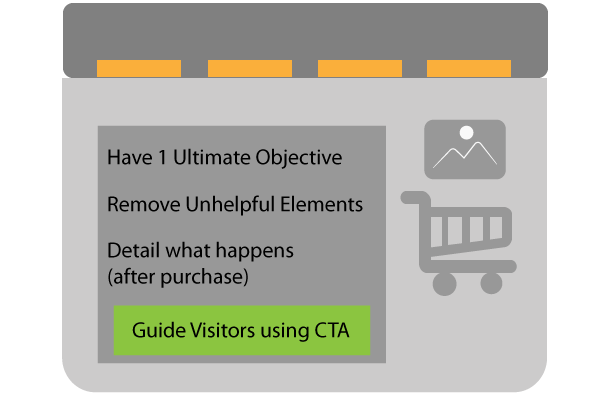
- Ultimate Objective: Determine which is your ultimate objective
- WebPage Elements: Remove WebPage elements (social icons, write a review etc.) that hinder user-interaction.
- Guide Visitors: You can use various elements to guide visitors towards your objective (colors, images, call to actions, links, words).
- Buy Now: For that to improve, also detail (briefly) what happens after a purchase (the trick is to put the visitor in to thinking mode for AFTER checkout process).
5 Key Strategies for eCommerce Conversion Rate Optimization
Optimizing your online store isn’t about guesswork. It’s about using tested methods to remove friction from the buying process and build confidence with your audience. Below are five effective techniques you can start using today to see a real improvement in your sales and overall performance.
1. Streamline Your Checkout Process
A complicated checkout is one of the biggest reasons for cart abandonment. Every extra step or unnecessary form field gives a customer a reason to leave. The goal is to make buying from you as fast and easy as possible. A key part of this particular eCommerce conversion optimization technique involves a few simple changes:
- Offer a guest checkout option. Forcing users to create an account before they can buy is a major conversion killer.
- Reduce the number of form fields to only the essentials. Do you really need their phone number?
- Show a progress bar so customers know exactly where they are in the process and how many steps are left.
- Be transparent about all costs, including shipping and taxes, early on. Surprises at the final step lead to abandoned carts.
2. Use High-Quality Product Images and Videos
In eCommerce, your customers can’t touch or feel the products. Your product visuals have to do all the heavy lifting. Grainy, small, or single-angle photos simply won’t cut it. To build trust and help shoppers make a confident decision, you must provide excellent visuals. This is a critical aspect of any conversion optimization strategy.
Focus on including multiple high-resolution images from different angles. A zoom feature is essential so users can inspect details. Even better, include a short product video showing the item in use. This helps customers visualize how the product will fit into their own lives, making them much more likely to click “Add to Cart.”
3. Leverage Social Proof and Customer Reviews
People trust other people more than they trust brands. Social proof, in the form of customer reviews and testimonials, is incredibly powerful. When a visitor sees that others have purchased a product and had a positive experience, it significantly reduces their buying anxiety. Integrating social proof is a fundamental eCommerce CRO tip.
Prominently display star ratings on your product and category pages. Feature detailed customer reviews that talk about the product’s quality and the customer’s experience. You can also include user-generated content, such as photos of customers using your products, to build a stronger sense of community and authenticity.
4. Optimize the Mobile Shopping Experience
More than half of all online traffic now comes from mobile devices. If your store is difficult to navigate on a smartphone, you are losing sales—it’s that simple. An effective approach to improving eCommerce conversions requires a mobile-first mindset. Your site must be fully responsive, meaning it looks and works great on any screen size.
Ensure your mobile site loads quickly, as slow speeds are a huge deterrent. Buttons and links should be large enough to be easily tapped with a thumb, and navigation menus should be simplified for smaller screens. Test the entire shopping journey on your own phone, from browsing to checkout, to find and fix any points of friction.
5. A/B Test Your Calls-to-Action (CTAs)
Your “Add to Cart” or “Buy Now” button is one of the most important elements on your product page. But have you ever tested it to see if it could perform better? A/B testing, or split testing, involves creating two versions of an element to see which one performs better. This is a core data-driven eCommerce conversion optimization technique.
You can test almost anything about your CTA button:
- Color: Does a green button work better than an orange one?
- Text: Does “Add to Bag” convert higher than “Add to Cart”?
- Placement: Is the button more effective above the product description or below it?
- Links: Is certain links clicked more than others? Track it.
By continually testing and implementing the winning variations, you can make small, incremental improvements that add up to a significant increase in your conversion rate over time. It’s a never ending process of refinement (just like Japanese Kaizen philosophy) that leads to sustainable growth.