The landscape of search engine optimization is always evolving, and with the rise of artificial intelligence in Google’s core algorithms, adapting your strategy is no longer an option, it’s a necessity. Understanding how to optimize for Google AI Mode is key to maintaining and improving your online visibility.
This guide for 2026 will walk you through essential techniques to help your content not just survive, but thrive in the age of AI-powered search. From pinpointing the right keywords to structuring your content for maximum AI comprehension, we’ll cover the critical steps you need to take.
- Video Tutorial for Ranking in Google AI Mode
- Target Keywords Precisely
- How-to Optimize Content for AI Mode
- Advanced Google AI SEO
- Actionable “How-To” Checklist
- What is “AI Mode” in Search?
- Let’s Dissect What Google Says about AI Mode
- Key Strategies for How-to Rank in AI Mode
- Does Traditional SEO Still Matter for an AI Search Ranking?
Video Tutorial for Ranking in Google AI Mode
Get ready to refine your approach and ensure your valuable content reaches its intended audience effectively.
Target Keywords Precisely
Effective keyword research remains the bedrock of any successful SEO strategy, even in the era of AI. For Google AI Mode, the focus shifts from merely identifying popular terms to understanding user intent and semantic relationships. This means looking beyond keywords & keyphrases.
Consider long-tailed keywords that capture specific user queries, often reflecting a more defined intent. These phrases, typically three or more words, can bring highly qualified traffic. Additionally, identify complimentary keywords, synonyms of those words, related terms, and variations that enrich your content and provide a comprehensive answer to a searcher’s underlying question.
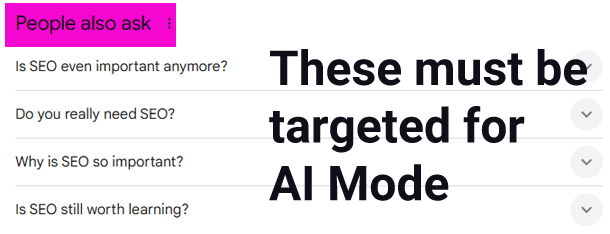
By targeting a cluster of related keywords rather than isolated terms, you signal to AI algorithms that your content offers a deep, nuanced understanding of the subject, covering all angles a user might explore. This approach aligns perfectly with how AI processes and presents information.
How-to Optimize Content for AI Mode
Google rankings are built on SEO essentials. Basically, great website that is easy to use, loads reasonably fast, mobile responsive and isn’t blocking Google crawlers. Coupled with content that is helpful original and created for people. The new algorithm however, seems to be focused on ranking best of the best websites. So, let’s make sure yours is favored like this:
Expertise and Authoritativeness
Google’s AI actively seeks high-quality, expert-backed content. If your content demonstrates subject matter expertise and originates from a credible, trustworthy brand or author, it has a stronger chance of appearing in AI-powered results. This aligns directly with Google’s established content quality guidelines focusing on authority and trustworthiness.
Areas to double check are, your business details throughout your website, contact page with author information (business and or personal details), privacy policy, terms and conditions, about us page. Consistent linking your social media profiles and your website (linking both ways, and interlinking social media profiles when appropriate). If using Schema Markup, use itemprop sameAs.
Clarity and Structure
Google AI algorithms have always preferred well-structured content. Utilize short content chunks, ensure correct usage of HTML headings (H1, H2, H3, H4, H5, or H6) consider step 1 step 2 etc. type of headings, and also consider using formatting like numbered or bulleted lists when appropriate. This enables Google’s algorithm to comprehend content more effectively, a fundamental aspect of how Google ranks content, which remains true for AI Mode results as well.
Topical Depth
Prioritize creating in-depth content. Google AI Mode now favors websites and webpages that not only address the essential search intent but also provide extensive information on a given subject matter. This comprehensive coverage is a critical AI Mode ranking factor. For example: content about “which laptops to buy in 2026” could be extended like so: “top 5 laptops for 2026 reviewed” but people may want to know about what is cpu and how does it work, what is ram, what is ssd etc. Do not target this or that keyword only, but rather focus on building an authority on your chosen niche.
Freshness
Google frequently crawls websites with fresh and regularly updated content. Low-quality, outdated pages will not be featured in Google. Particularly true for certain type of websites (e.g. news) a strategy to update content regularly should be an integral part of your SEO and AI Mode ranking strategy as well. Does that mean previously published content won’t rank in Google AI mode? No, great content can always rank in Google AI mode regardless of published date. However regularly publishing content ensures effective crawling and indexing which in turn can help boosting Google rankings.
Semantic SEO and NLP Optimization
Employ natural language and variations of keywords, including synonyms. AI Mode, using its Query fan-out technique, understands search intent by examining multiple content sub-categories (like Shopping, Knowledge Graph, Real-World Map Data, Finance). It then sources results accordingly. Optimizing for AI Mode results requires precise keyword targeting, moving beyond single keyword focus.
Structured Data
This aspect falls under semantic optimization in terms of your website’s underlying code. Implementing structured data helps search engines understand the context and relationships of your content more clearly.
Advanced Google AI SEO
Beyond content, several technical and user experience factors play a crucial role in Google AI SEO. An easy to navigate website ensures users can find what they need quickly, reducing bounce rates and signaling positive user experience to AI algorithms.
Strategic internal linking helps distribute ‘link juice’ throughout your site, highlights important content, and assists both users and search engine crawlers in discovering relevant pages.
Outlinking to complimentary resources has always been important as it allows better usability, as well as allowing Google to follow links to associate your content with related content.
Furthermore, mobile friendliness is non-negotiable; with a significant portion of searches occurring on mobile devices, a responsive design is vital for ranking success in AI Mode.
Page Experience Core Web Vitals
Google is increasingly selective about which websites it directs traffic to. This means slow-loading websites or those offering a poor user experience will not rank effectively in AI Mode.

Think about a time you visited a website that just wouldn’t load in time, or, you couldn’t click on a button because it kept on moving around. Was it frustrating? You likely closed the tab, or perhaps searched Google again. In 2026, such experiences will simply not cut it with the introduction of Google AI Mode. This means, to be able to rank in Google AI Mode a website now must provide great user experience.
Core Web Vitals metrics like Largest Contentful Paint (LCP), Interaction to Next Paint (INP), and Cumulative Layout Shift (CLS) measure real-world user experience. Optimizing these factors is now a must and Poor URLs cannot be ignored. A fast, stable, and interactive page experience is not just good for users, it’s a direct signal to Artificial Intelligence behind Google algorithms that your site deserves to be featured.
Actionable “How-To” Checklist
- Create Detailed Author Bios: Link every article (news story or blog post) to a real author with a detailed bio page showcasing their expertise and experience. On that Author bio page (or about us page), include links to social media profiles of the author (author can be a real person or even a business).
- Implement Robust Schema Markup: Go beyond the basics of using plugins that automatically add schema markup JSON-LD, learn to extend your Schema Markup so that your website is semantically optimized. Use a tool like Google’s Rich Results Test to validate your structured data upon implementation.
- Answer the “Five Ws”: For any topic, make sure you clearly answer Who, What, When, Where, and Why. This makes your content a prime source for factual snippets including featured snippets and AI overviews.
- Focus on a particular Niche: Build deep, interconnected content on one core topic to establish topical authority.
- Get Cited and Get Backlinks: Create sharable content, make sharing easy and encourage website visitors share your content. If resources allow, get other reputable sites to link to your content as a source. Think of citations and natural backlinks as the “peer review” or a “thumbs up vote” for Google organic rankings including AI Mode.
- Ensure Technical SEO is Flawless: Your site must be fast, mobile-friendly, and crawlable. AI won’t cite a source that it knows website visitors can’t reliably access.
What to Avoid
- Keyword Stuffing: AI is much better at understanding natural language and context. Stuffing keywords will only hurt you.
- Vague or Unverified Claims: If you can’t back up a statement with data or a source, don’t make it.
- Poorly Structured Content: Long, unbroken chunks of text are difficult for both users and AI to parse. Badly coded HTML themes or excessive use of plugins or apps on the website coding are also part of HTML structure that Google evaluates.
- AI-Generated “Fluff”: Using AI to generate generic, low-value content is a losing strategy for 2026 and beyond. Use AI as a tool to enhance human-written, experience-driven content. Ask yourself this “why would Google even index your webpages if AI has generated content on those webpages?”. Original Helpful Content created for People is the only way forward in the future of AI driven search results.
Is SEO Dead?
I get this question asked often (or even see many YouTubers clickbaiting with this question). All you need to know is, as long as Google is around SEO will be important because after all, it is Search Engine Optimization. Furthermore, Google Ads PPC is tied to SEO and Google makes plenty of $ profits through it.
Future of Google Search Results
Future of SEO and Google search results is shifting like the sand dunes of Sahara desert. Original, useful and reliable content that is also shareable will ensure your website will get great results online for eternity. You can download the latest SEO PDF for 2026 here. To learn more visit the blog post for learning how to rank in Google AI Mode.
Frequently Asked Questions
What is Google AI Mode and how does it affect SEO?
Google AI Mode refers to the integration of artificial intelligence into Google's search algorithms, influencing how content is understood, ranked, and presented. It affects SEO by prioritizing content that demonstrates expertise, topical depth, clear structure, and semantic relevance, moving beyond simple keyword matching to contextual understanding.
What are Core Web Vitals and why are they important for AI SEO?
As the name suggests, Core Web Vitals, the core requirements of a website to provide good user experience is what is measured. Main areas include page load time and layout shifts and also user interaction with webpage elements. Core web vitals are important metrics for SEO because page experience is part of Google ranking algorithm.
Why are long-tailed keywords important for AI SEO?
Long-tailed keywords are crucial for AI SEO because they often reflect more specific user intent and complex queries. AI algorithms are better at understanding the nuances of natural language, making these detailed phrases highly effective for attracting qualified traffic and signaling comprehensive content coverage.
How does content freshness impact ranking in Google AI Mode?
Content freshness is a significant factor in Google AI Mode as AI algorithms prioritize up-to-date and regularly maintained information. Outdated or stagnant content is less likely to be featured in AI-powered summaries, emphasizing the need for a consistent content update strategy.
Should I change my content creation process for Google AI Mode?
Yes, adapting your content creation process is essential. Focus on creating highly authoritative, deeply researched, well-structured original content that uses natural language and semantic variations of keywords. Prioritize comprehensive answers to user queries and ensure your site's technical health and user experience are top-notch to align with AI Mode's preferences.