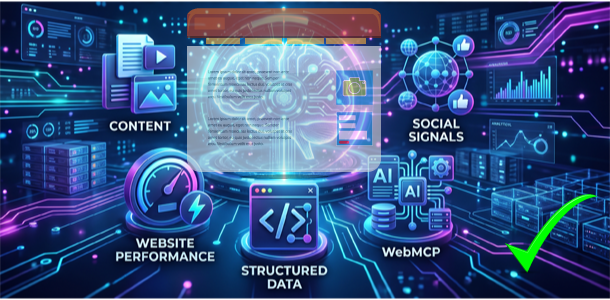
What is AEO and SEO
AEO and SEO represent the dual practice of optimizing digital environments for both natural search algorithms (Google Search and AI Overviews) and generative AI engines (AI Mode, Gemini, ChatGPT) by focusing on expert-vetted semantic content, fast site responsiveness (Core Web Vitals), error-free JSON-LD structured data, accessible WebMCP agent integrations, and trusted social brand validation.
Search engine optimization in 2027 will prioritize Core SEO fundamentals, Answer Engine Optimization (AEO), technical crawlability, and AI agent accessibility over traditional keyword matching. To rank effectively across both standard search engine results and generative AI features, all websites must now optimize five core areas: semantic content generation, website performance metrics, valid structured data implementation, WebMCP integrations, and authentic social signals.
Strategic Content and Search Intent
Publishing high-quality people first focused content requires aligning directly with exact search intent, and, demonstrating firsthand Experience, Expertise, Authoritativeness, and Trustworthiness (EEAT). Search algorithms prioritize original research, expert commentary, and content that directly answers visitor/customer questions.
- Organize related pages into tight topical clusters.
- Prioritize original examples over repetitive generic text.
- Write naturally for humans while avoiding excessive keyword repetition.
Examples for Content Optimization for 2027
Search algorithms can render HTML whereas AI agents analyze content differently. Your job is to ensure both “Search and AI” algorithms can analyze your content to work out, if the content is original useful and also who has created the content. Things you can do:
- Ensure the website extends the topic, for example: this particular how-to SEO type of blog post can be extended in to Local Business SEO, eCommerce SEO, and or optimization for AdSense publishers etc.
- Feature author bylines linking to a dedicated author page that establishes your digital expertise.
- Format pull quotes using semantic <aside> elements instead of blockquotes when quoting your own words.
- Link out to external websites with complimentary content
Website Performance and Core Web Vitals (CWV)
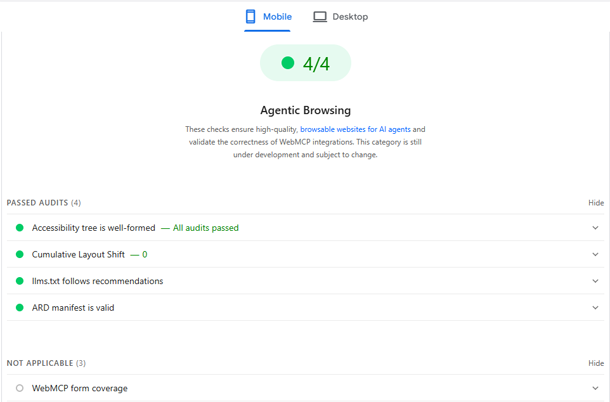
Technical performance remains a primary filter for search engines. Google requires exceptional mobile usability and fast load times. Focus your development efforts on the main Core Web Vitals (CWV) thresholds: Largest Contentful Paint (LCP), Interaction to Next Paint (INP), Cumulative Layout Shift (CLS), Time to First Byte (TTFB) and most importantly in 2027 “Agentic Browsing” (learn more about Lighthouse agentic browsing scoring here).
Examples for Performance Optimization
Speed and usability dictate how search engines crawl and rank your website because Google can evaluate user retention and engagement through many signals including Chrome User Experience Report. Concrete technical steps to improve loading metrics include:
Here are proven concrete technical steps to improve loading metrics:
- Configure Cloudflare CDN caching and WAF security rules at the edge to reduce server response times.
- Dequeue unused scripts and stylesheets using custom PHP hooks in your WordPress theme instead of relying on heavy third-party plugins.
- Optimize images: reduce size if too large (important for eCommerce product images), use scrset when appropriate, use
fetchpriority="high"decoding="async", explicitly defining width and height attributes in the HTMLwidth="N" height="N"and for images below the foldloading="lazy".
Here’s a WordPress example for blog post feature image (smart to use)
if ( has_post_thumbnail() ) :
        $thumb_id  = get_post_thumbnail_id();
        $thumb_url = wp_get_attachment_image_src( $thumb_id, 'thumbnail-size', true );
        echo '';
endif;  //end if
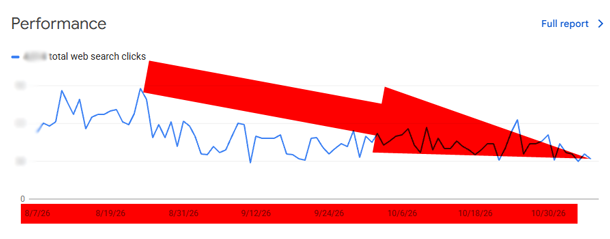
Core Web Vitals are a Google Ranking Signal
I’ve recently created a free tool and hosted on rankya.com website, AI Visibility Auditor, drove 50K+ website visitors within a couple of weeks, which then drastically failed CWV.
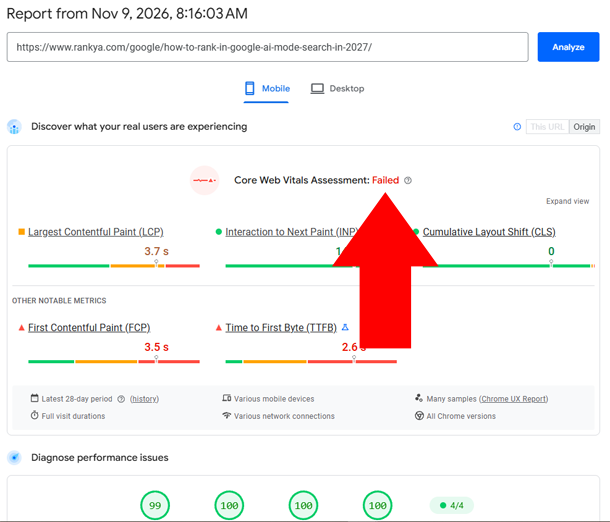 Correlation in traffic spikes in Search Console:
Structured Data and Schema Markup
Search crawlers and AI bots rely heavily on schema markup to categorize entities and verify publication data. Implement JSON-LD code for types like Organization, Article, LocalBusiness, Products and BreadcrumbList. Ensure the structured data code accurately reflects the visible on-page text (this is very important).
Examples for Structured Data Implementation
Entities must be explicitly defined using machine-readable code so Answer Engines can extract factual data accurately. Things you can do:
- Deploy JSON-LD Organization schema on the homepage specifying your business name, logo URL, and official social profiles.
- Inject Article or BlogPosting schema on blog posts to declare the author, date published, and date modified.
- Add QAPage schema or FAQPage schema (Rich Results no longer support FAQPage schema) to pages answering specific customer questions to capture AI Overviews and rich snippets.
WebMCP: AI Agents and Search Protocols
The Model Context Protocol (WebMCP) alters how AI agents index, interact and interpret website data. Search visibility in 2027 will heavily depend on making server information directly understandable to LLM-driven agents. Clear site architecture, logical internal linking, and accessible HTML and accessible plain HTML text ensure these agents can extract and cite your content accurately.
Examples for WebMCP Integration
Preparing your server architecture for the Model Context Protocol requires opening pathways for AI agents to retrieve data directly. Things you can do:
- Create custom REST API endpoints to expose specific site data to WebMCP clients.
- Validate JSON responses to ensure AI tools receive clean, stripped-down text without unnecessary HTML DOM clutter.
- Set up clear hierarchical sitemaps and distinct resource URIs that agentic crawlers can easily parse.
More Resources by RankYa How-to Add WebMCP to Your Website, and video tutorial: 3 Golden Rules for SEO in 2027
Social Signals and Brand Mentions
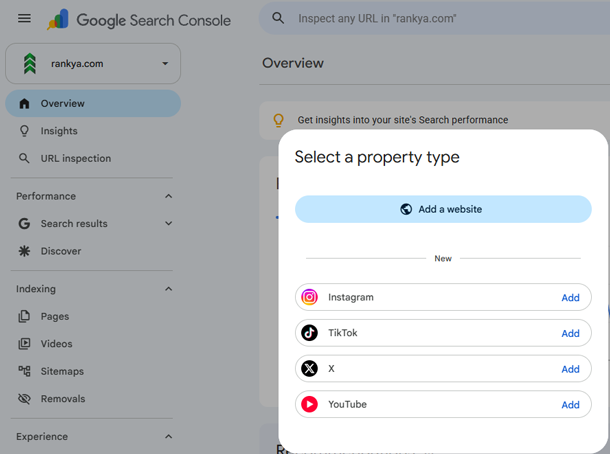
Brand authority extends far beyond your primary domain. Search systems evaluate unlinked brand mentions, business directory accuracy, and social signals to verify entity trust. Search Console’s recent addition proves the importance of this for Google rankings of the future.
Examples for Building Social Signals
Off-page entity verification relies on consistent digital footprints across the web. Things you can do:
- Publish regular fresh content on social media profiles (Facebook Instagram TikTok X or niche community based websites or groups).
- Publish videos on a dedicated YouTube channel to drive engaged traffic and brand recognition.
- Maintain a regularly updated Google Business Profile with accurate operating hours, services, and location data.
- Ensure your brand name, address, phone number (NAP), opening hours business assets remain identical across all industry directories and social platforms.
Elevate Your Website Optimization Strategy
Consolidate your competing pages, audit your codebase for performance bottlenecks, and refine your technical structure to capture higher rankings in 2027. Apply these principles to your website environments today to build a sustainable, high-traffic digital presence in AI driven internet of 2027 and beyond.
Your Business Website Now Ready
Once again, there is no seperate SEO versus search engine optimization for AI agents. Optimizing for AI agents is built upon core SEO best practices. This will still be the case in 2027
Frequently Asked Questions
What are the most important SEO Tutorials for 2027?
The most important tutorials focus on semantic content structure, passing Core Web Vitals, implementing accurate structured data, preparing for WebMCP AI agents, and building off-page social signals.
How will WebMCP affect SEO in 2027?
WebMCP allows AI agents to read and retrieve specific data directly from web servers, meaning technical SEO must focus on making site data, like custom REST APIs, easily parsable for these automated systems.
Do social signals impact search rankings?
Yes, unlinked brand mentions, consistent business profiles, and authentic social media interactions act as trust verification signals for modern search engine algorithms.